YOU KNOW THE SHOTS.
bUT DO YOU KNOW WHICH ONE TO USE?
Push? Chop-block? Side-swipe?
You're standing at the table. The serve arrives and you can't identify the spin.
You have long pips on your backhand — but no clear thought in your head.
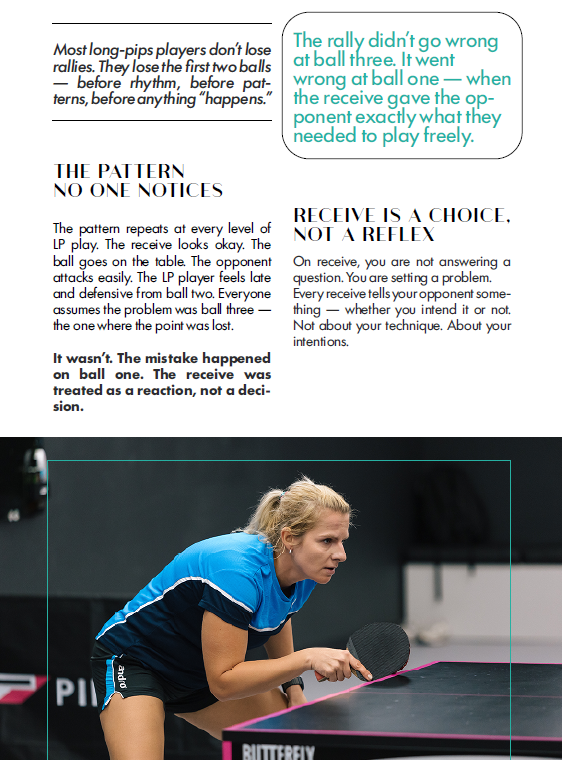
You return the ball somehow. Your opponent attacks immediately.
The next serve comes. The same thing happens again.
„Against a stronger player, you need a decision system — not a faster reaction.”
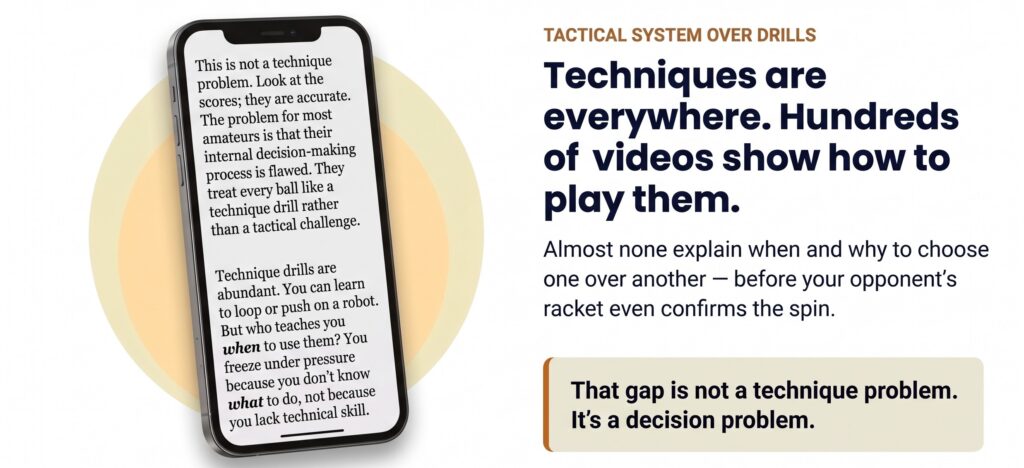
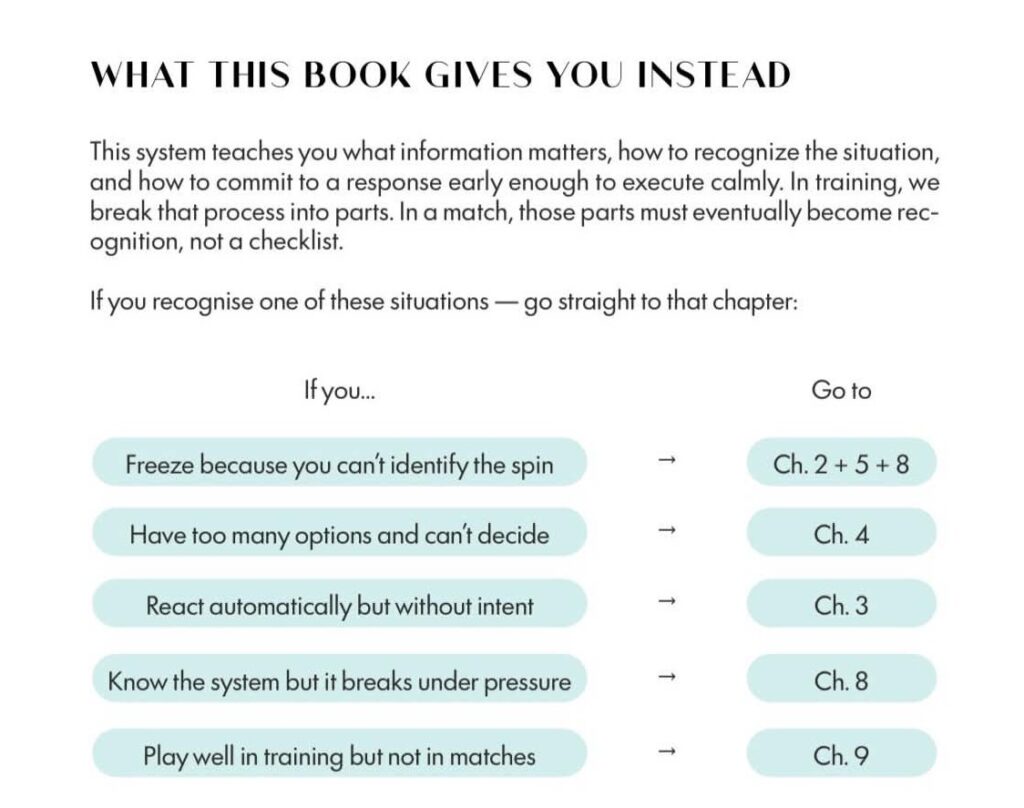
This book teaches you what information actually matters, how to recognize the
situation in front of you, and how to commit to a response early enough to execute it calmly.
You don't need a perfect decision. You need a committed one. That distinction is everything.
With inverted rubber you play the spin; with long pips, the rubber reacts, and you manage the outcome. Because pips return incoming spin rather than generate their own, any misread cannot be fixed mid-stroke—your decision must be set before contact.
WHY LONG PIPS CHANGE EVERYTHING
YOUR RUBBER PLAYS BY DIFFERENT RULES
Long pips don't reward perfect technique. They reward finished decisions.
THE ILLUSION OF SAFETY
"I PLAYED IT SAFE" IS THE MOST COMMON LIE IN LONG PIPS RECEIVE
Most long pips players think they lose points because they're too risky. In reality, they lose points because they're too unclear.
Slow ball, no spin, low trajectory — none of that is safety by itself. Real safety means your opponent has no easy next option. If they can attack comfortably after your receive, it wasn't safe, even if it landed perfectly on the table.
Safe without intent isn't safe. It's delayed trouble.
This book is written for beginner-intermediate players and above who use long pips on the backhand, close to the table.
It is not about classical defensive chopping far from the table. It's about the modern disruptive close-to-table game — and the decisions that make it work.
You play long pips on your backhand
You play close to the table (not classic far-from-table defense)
You're beginner-intermediate level or above
You freeze or guess on receive, especially against stronger opponents
WHAT'S INSIDE
WHAT YOU'LL LEARN
Read the spin Recognize what’s coming. Choose the receive Know which shot to use. Use your long pips intentionally Control, disrupt or attack. Control what comes next Use placement with purpose. Make faster decisions Especially under pressure.
PRIVATE VIDEO LESSON! See the system in action. Watch real match examples as Aga explains the decisions behind each receive. (LINK IN THE BOOK)
1. Why You Freeze — The real root cause against stronger players, beyond technique.
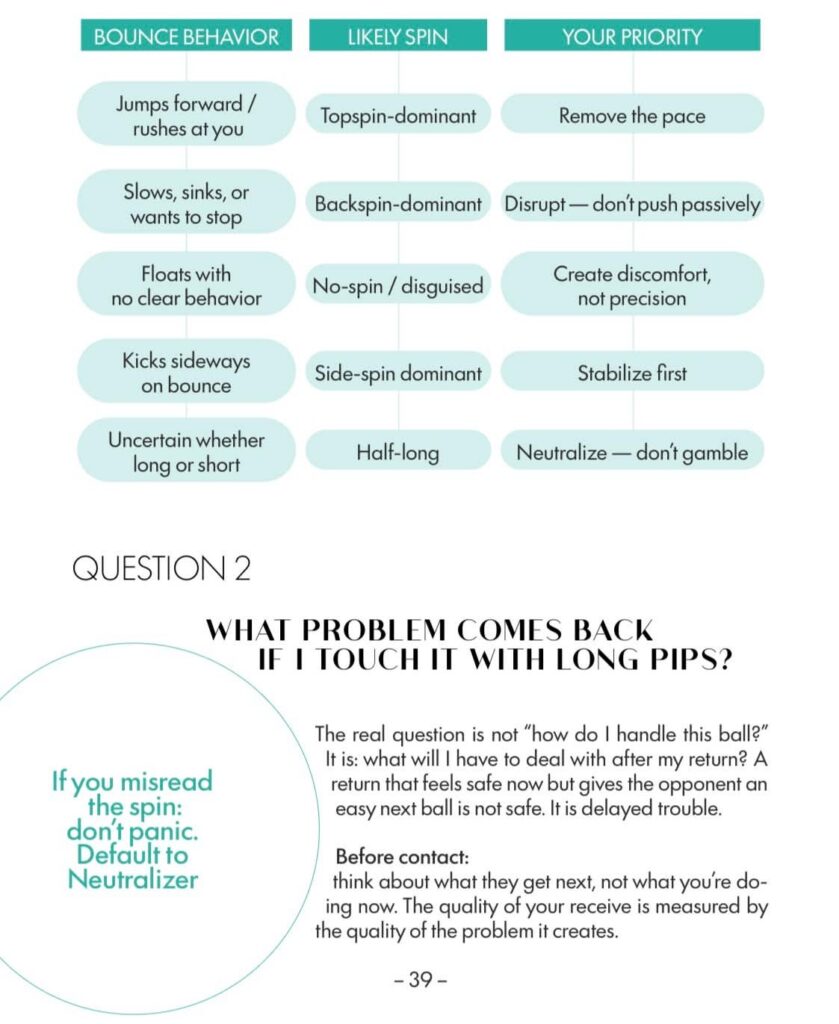
2. Reading Spin Early — How to track the opponent’s racket and bounce before contact.
3. The Long Pips Logic — Why every decision must be finished before touching the ball.
4. The Ball-One Trap — Why points are won or lost on the receive, not ball three.
5. The 4 Receive Roles — Neutralizer, Breaker, Initiator, and Emergency.
6. The 3 Core Questions — A repeatable framework for automatic split-second choices.
7. Contact & Trajectory — Rally breakdowns showing how one touch shapes the point.
8. The „Safe Play” Myth — Why passive returns put you at a disadvantage.
9. Under Pressure — Exact fallback rules when timing and positioning break down.
10. Decision-First Drills — Practice recognition and tactical speed, not just strokes.
Includes access to a private video where Coach Aga shows real examples of serve receive and how to apply this exact system in a match.
I'll walk you through it myself.
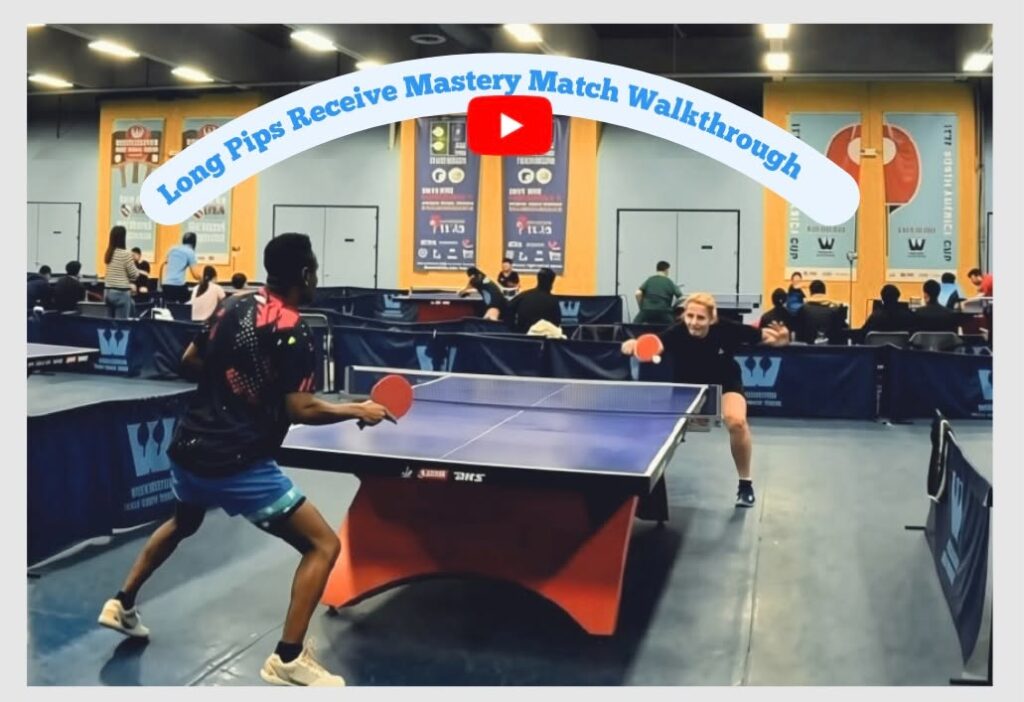
This video was filmed at a tournament. I walk you through the 4 roles :Neutralizer, Breaker,Initiator, Emergency and when I actually reach for each one. Real situations from matches I’ve played, not a classroom explanation.
🔒 Reader-Only Access: Inside the book, you’ll find a private direct link to this full walkthrough. It’s unlisted on YouTube—strictly reserved for readers.
You don't need to know everything about the serve. You need to know what to do when you don't.
Subscribe for latest updates
I motivate and coach table tennis enthusiasts, from beginners aiming to learn the basics to advanced players striving to refine their skills and elevate their game to the next level.